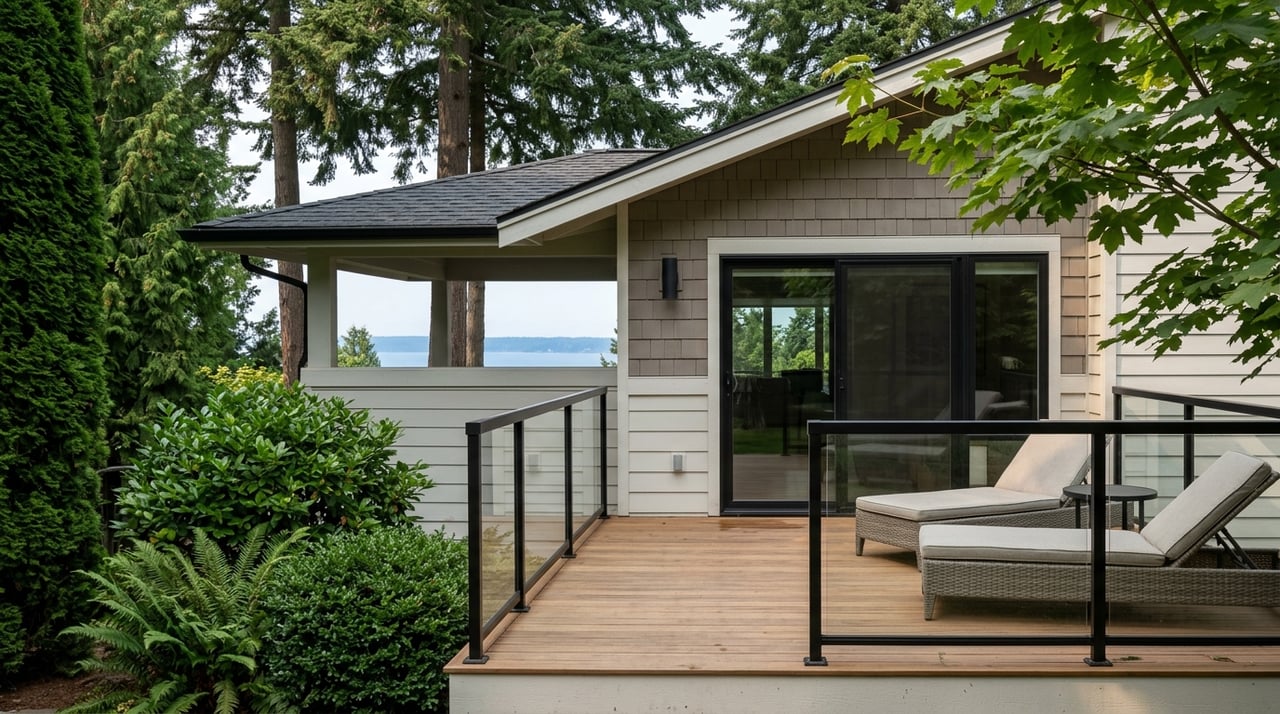
If you own a Mukilteo home with a view of Possession Sound, it can be tempting to assume the market will automatically reward that feature with a big premium. Sometimes it does. But in a fast-moving market, the right price depends less on the word "view" and more on what kind of view you actually have, how protected it is, and how your home compares to recent nearby sales. If you want to price strategically instead of emotionally, this guide will show you what matters most. Let’s dive in.
Why Mukilteo view pricing is different
Mukilteo is not just another Snohomish County market. It is a waterfront city where long-range planning continues to focus on the shoreline, including the shoreline master program, downtown waterfront master plan, and waterfront improvements. That local context matters because buyers often see Mukilteo view homes as a distinct product, not just a higher-priced version of an average home.
The current numbers also support a highly local pricing approach. In March 2026, Mukilteo’s median sale price was $980,000, homes sold in about 12 days, and 30.4% sold above list price. By comparison, Snohomish County had a March 2026 median sale price of $738,000 with 2.04 months of inventory, which is useful market context but not precise enough for pricing a Sound-view property.
Start with the right question
The key pricing question is not, “Does your home face the water?” The better question is, “How complete, usable, and durable is the view compared with similar homes that have actually sold?”
That distinction matters because proximity to the water is not the same as a meaningful view. An appraisal article focused on viewsheds explains that MLS view reporting can be inconsistent and that elevation alone does not guarantee a true visual connection to the water. In other words, a peekaboo view, a filtered view, and a wide-open Sound panorama should never be priced the same.
Think in view categories
For most Mukilteo sellers, pricing works best when you treat view value as a spectrum rather than a yes-or-no feature. That means separating your home into the most accurate category possible before choosing comps.
Waterfront or near-frontage homes
These homes are often the rarest and can draw strong buyer attention, but the value is not based on scenery alone. Buyers may also weigh shoreline rules, maintenance needs, and property-specific constraints when deciding what they are willing to pay.
Mukilteo’s land-use notices show active shoreline-related matters, including a waterfront rezone and critical-areas updates affecting wetlands, streams, flood-prone areas, and geologically hazardous areas. That means a waterfront-adjacent property may have pricing factors beyond the view itself.
Elevated full Sound views
This is often where you see the strongest non-waterfront premiums. A broad, open view from an elevated site can feel highly distinctive to buyers, especially when the sightline is wide and the living spaces are oriented to capture it.
Research from a Washington study found that water-view premiums varied widely, from 8% for a poor partial ocean view to 59% for an unobstructed ocean view. The takeaway is simple: full panoramas can command more, but not every water-facing home belongs in that top tier.
Partial or filtered Sound views
This is where many pricing mistakes happen. Sellers may remember every sunset and ferry glimpse, but buyers usually compare what they can see today, from the main living areas, during a showing.
A partial view can still add value. It just should not be grouped with homes that offer a much wider, cleaner, or more direct visual connection to the Sound.
No-view homes nearby
These matter more than many sellers realize. No-view sales in the same micro-neighborhood help isolate what buyers are paying for the house, lot, condition, and location before you add any premium for the view.
Without these controls, it is easy to over-credit the view and miss what the market is really saying. That can lead to a list price that looks good on paper but slows down buyer activity.
Why view quality matters more than averages
One of the clearest lessons from the research is that lumping all view homes together creates misleading numbers. The Bellingham study found dramatic differences between poor partial views and unobstructed water views, which is exactly why broad averages tend to fail in premium segments.
That is especially true in Mukilteo, where homes can vary by elevation, tree cover, angle to the Sound, and how much of the water is visible from key rooms or outdoor spaces. Two homes only blocks apart may not belong in the same pricing bucket at all.
View permanence affects buyer confidence
A beautiful view is more valuable when buyers believe it is likely to remain open. In Mukilteo, that question has real weight because waterfront planning and redevelopment are ongoing.
The city’s shoreline code is designed in part to preserve visual access to Puget Sound in shoreline-facing development, including building breaks, portals, and waterfront setbacks intended to retain views from Front Street. At the same time, the city’s capital planning and waterfront work remind sellers that future improvements, redevelopment, and property-specific restrictions can still shape how buyers judge long-term view security.
For pricing, that means you should not only ask what your view looks like today. You should also ask how permanent it feels to a cautious buyer.
Use Mukilteo comps, not county averages
Countywide data helps describe the broader market, but it should not drive the list price for a view home in Mukilteo. A seller on a view lot near the Sound is competing with similar Mukilteo properties first, not with every home across Snohomish County.
A stronger comp set usually includes recent sold homes in the same micro-neighborhood and the same view class, adjusted for factors like:
- Lot size
- Condition and updates
- Interior finish level
- Outdoor living usability
- Degree of view openness
- Obstruction risk
- Waterfront or shoreline-related constraints
This approach is more defensible because buyers are not paying a generic median price. They are paying for a specific combination of setting, rarity, and lifestyle value.
Common pricing mistakes to avoid
Even in a strong market, overpricing a view home can reduce momentum. Buyers in this segment tend to notice quickly when a seller is charging for a premium the photos or in-person showing do not fully support.
Pricing a partial view like a full panorama
This is one of the most common mistakes. The research shows that view premiums vary sharply by quality, so a seasonal peek or filtered view should not be priced like an unobstructed Sound-facing home.
Confusing closeness with value
Being near the water is not always the same as having a valuable view. A lower-elevation home close to the shoreline may have less practical view appeal than an elevated home farther back with a wider sightline.
Ignoring restrictions and tradeoffs
Near-water homes can carry added considerations tied to shoreline regulation, critical-area review, flood concerns, and marine-related maintenance. Mukilteo’s shoreline and land-use materials support the idea that buyers may weigh both amenity and limitation when making an offer.
Leaning on broad estimates
Portal estimates and citywide averages may be fine for casual browsing, but they are too blunt for a specialty property. In a premium niche, one or two well-matched closed sales can tell you far more than a generic automated estimate.
A practical pricing strategy for sellers
If you are preparing to sell a Mukilteo view or Sound home, a smart pricing plan usually follows a few simple steps.
1. Define the real view class
Be honest about whether your home offers waterfront appeal, a full elevated Sound view, a partial view, or mostly location value without a meaningful view premium. Accuracy here sets the tone for the whole strategy.
2. Study recent nearby solds
Focus on sold properties that match your micro-location and view quality. In a market where Mukilteo homes are moving quickly, recent sales matter more than older ones because buyer expectations can shift fast.
3. Adjust for usability
Ask whether the view is visible from main living spaces, the primary bedroom, or outdoor entertaining areas. Buyers generally value views more when they are easy to enjoy in everyday life.
4. Consider permanence
Think about trees, neighboring lots, redevelopment patterns, and known planning factors. A view that feels stable often supports stronger buyer confidence than one that feels uncertain.
5. Let the market support the premium
Mukilteo’s current market can support strong pricing when the home and comp set justify it. But a premium should come from evidence, not from a blanket assumption that every water-oriented home deserves the same bump.
The bottom line on Mukilteo view-home pricing
A Sound view can absolutely add value in Mukilteo, but only when it is priced with precision. The strongest strategy is usually built around recent sales in the same micro-neighborhood and the same view category, with careful attention to view quality, elevation, proximity, condition, and permanence.
If you want to price your Mukilteo view home with a local, evidence-based strategy, Pete Keating can help you sort through the comps, evaluate how buyers are likely to see your property, and build a list-price plan that fits today’s market. Call or text Pete for a local market consultation.
FAQs
How should you price a Mukilteo home with a Sound view?
- You should usually price it by comparing recent sold homes in the same Mukilteo micro-neighborhood and the same view category, then adjusting for condition, lot size, and view quality.
Does a partial water view add value in Mukilteo?
- Yes, a partial water view can add value, but it should not be priced like a home with an unobstructed full Sound panorama.
Are waterfront homes in Mukilteo always worth more?
- Not always, because buyers may also consider shoreline rules, critical-area issues, flood-related concerns, maintenance, and how usable the property is.
Why are county averages less useful for pricing Mukilteo view homes?
- County averages are too broad because buyers for Mukilteo view homes are usually comparing highly specific properties based on setting, rarity, and actual view quality.
Does future development affect the value of a Mukilteo view home?
- It can, because buyer confidence often depends on whether the current view feels likely to remain open over time.